[From the Author of “Poems
by Kolki – Absolutely Humane”, “Real Path To 9/11”
& “Sayings of Kolki”]
Abstract: War for American Independence
never ended, British troops invaded, burned Capitol and White House, destroyed
the Naval Yard, looted the merchants and tried to take over key port cities in
1814. Civil war was mainly wars between Loyals vs. Patriots dividing Americans
forever ideologically! The future plan of attacks mutated creating “Secret society of the Elect” and “Philosopher Kings” among influential Americans
including President, Military and related Agencies and Law Enforcement! 21st
Century High Tech surveillance and joint military and intelligence exercises
only gave them free access to US capability and vulnerability to destroy US
sovereign structures and high level Patriots using Remote Controlled Hijacking
of Passenger Airplanes as missiles in broad day light spreading massive
propaganda against Islam for cover ups and a ploy to implement Cecil
Rhodes plan of Global Colonization in peace time!
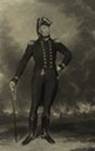 The British Fleet Sailed for Baltimore from the naval base at Bermuda On August 14, 1814

courtesy Library of Congress
The first two years of the war consisted of
scattered and inconclusive battles, generally along the border between the US
and Canada. But when Britain and its allies believed it had thwarted the threat
posed by Napoleon in Europe, more attention was paid to the American war.
On August 14, 1814, a fleet of British
warships departed from the naval base at Bermuda. Its ultimate objective was
the city of Baltimore, which was then the third largest city in the US.
Baltimore was also the home port of many privateers, armed American ships which
raided British shipping. The British referred to Baltimore as a "nest of
pirates."
One British commander, Rear Admiral George
Cockburn also had another target in mind, the city of Washington.
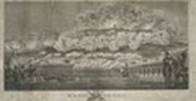 Maryland Invaded By Land

courtesy Library of Congress
By mid-August 1814, Americans living along
the mouth of the Chesapeake Bay were surprised to see the sails of British warships on the horizon. There had been raiding
parties striking American targets for some time, but this appeared to be a considerable
force.
The British landed at Benedict, Maryland,
and began marching toward Washington. On August 24, 1814, at Bladensburg, on
the outskirts of Washington, British regulars, many of whom had fought in the
Napoleonic Wars in Europe, fought poorly equipped American troops.
The fighting at Bladensburg was intense at
times, but the Americans could not hold. The federal troops retreated, along
with observers from the government including President James Madison.
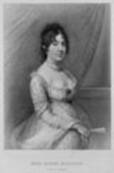 A Panic in Washington

courtesy Library of Congress
While some Americans tried desperately to
battle the British, the city of Washington was in chaos. Federal workers tried
to rent, buy, and even steal wagons to cart off important documents.
In the executive mansion (not yet known as
the White House), the president's wife, Dolley
Madison, directed servants to pack up valuable items.
Among the items taken into hiding was a
famous Gilbert Stuart portrait of George
Washington. Dolley Madison instructed that it had
to be taken off the walls and either hidden or destroyed before the British
could seize it as a trophy. It was cut out of its frame and hidden in a
farmhouse for several weeks. It hangs today in the East Room of the White
House.
 The Capitol Was Burned

courtesy Library of Congress
Reaching Washington on the evening of
August 24, the British found a city largely deserted, with the only resistance
being ineffective sniper fire from one house. The first order of business for
the British was to attack the navy yard, which they burned.
British troops next arrived at the US
Capitol, which was still unfinished. According to later accounts, the British
were impressed by the fine architecture of the building, and some of the
officers had qualms about burning it.
According to legend, Admiral Cockburn sat
in the chair belonging to the Speaker of the House and asked, "Shall this
harbor of Yankee democracy be burned?" The British Marines with him yelled
"Aye!" Orders were given to torch the building.
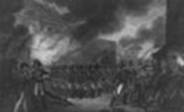 British Troops Attacked Government Buildings

courtesy Library of Congress
The British troops worked diligently to set
fires inside the Capitol, destroying years of work by artisans brought from
Europe. With the burning Capitol lighting the sky, troops also marched to burn
an armory.
At about 10:30 pm, approximately 150 Royal
Marines formed up in columns and began marching westward on Pennsylvania
Avenue, following the route used in modern times for inauguration day parades.
The British troops moved quickly, with a particular destination in mind.
By that time President James Madison had
fled to safety in Virginia, where he would meet up with his wife and servants
from the president's house.
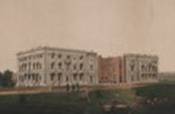
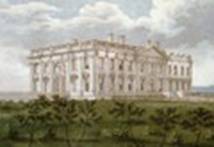 The White House and adjacent Treasury Building Were Burned

courtesy Library of Congress
Arriving at the president's mansion,
Admiral Cockburn reveled in his triumph. He entered the building with his men,
and the British began picking up souvenirs. Cockburn took one of Madison's
hats, and a cushion from Dolley Madison's chair. The
troops also drank some of Madison's wine and helped themselves to food.
With the frivolity ended, the British
Marines systematically set fire to the mansion by standing on the lawn and
hurling torches through the windows. The house began to burn.
The British troops next turned their
attention to the adjacent Treasury Department building, which was also set on
fire.
The fires burned so brightly that observers
many miles away recalled seeing a glow in the night sky.
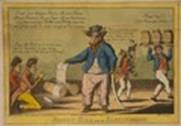 The British Carried Off Supplies

courtesy Library of Congress
Before leaving the Washington area, British
troops also raided Alexandria, Virginia. Supplies were carried off, and a
Philadelphia printer later produced this poster mocking the perceived cowardice
of the merchants of Alexandria.
With the government buildings in ruins, the
British raiding party returned to its ships, which rejoined the main battle
fleet. Though the attack on Washington was a grave humiliation to the young
American nation, the British still intended to attack what they considered the
real target, Baltimore.
Three
weeks later, the British bombardment of Fort McHenry inspired an eyewitness,
attorney Francis Scott Key, to write a poem he called "The Star-Spangled
Banner."
Article: NewPearlHarbour (9/11 False
Flag Operation Motives and Means)
Related Poems:
Intelligence
Democratic Security
Secrecy
Felons
Exorcist
Articles:  <9/11 Truth Smoking Guns
Remote Military Hijacking
Why Media Is Silent?
What
is Al-Qaeda?>
<9/11 Truth Smoking Guns
Remote Military Hijacking
Why Media Is Silent?
What
is Al-Qaeda?>
[Did you know Covert Intelligence like MI6, CIA, ISI, CSIS, RAW etc.
spends 95% of their time and money for setting up low-tech Patsies while their
sophisticated unit commit the high-tech crimes for the United Monarchies
guarded by Swiss Bank and Government Aided secrecy? Listen from the Horse’s
Mouth: http://www.kolki.com/peace/Von-Buelow-Interview.htm]
Article: British Business Man Cecil Rhodes Methodologies For Re-Annexation and Annexation of The New World!
The War of 1812
The War of 1812 at Sea
Related Articles
- August
24 - Today in American History
- The
War Up North - American History
- The
Continental Army - American History
- The
Battle of Princeton - American Revolution
- Siege
of Boston - American Revolution Siege of Boston
War of 1812
American History
Timeline - War of 1812
By Martin Kelly
- 1803-1812 - British impress approximately 10,000 Americans forcing
them to work on British ships.
- July 23, 1805 - British decide in Essex case that American traders
who travel between neutral and enemy ports will allow for the seizing many
commercial ships.
- January 25, 1806 - James Madison delivers report
concerning British interference and impressment
of sailors causing anti-British feelings to arise.
- August, 1806 - American minister James Monroe and envoy
William Pinkney are unable to resolve the major
problems between the British and Americans concerning commercial shipping
and impressment.
- 1806 - The British blockade France; American ships are caught in
the middle and the British seize approximately 1000 US ships.
- March 1807 - Thomas Jefferson receives the
Monroe-Pinkney treaty but does not submit it to
Congress because it represents a dismal failure for the Americans.
- June 1807 - The American ship Chesapeake is fired on by the
British ship Leopard after refusing to be boarded. This creates an
international incident.
- December 1807 - Thomas Jefferson attempts "peaceful
coercion" of the British with his embargo but it results in economic
disaster for merchants.
- 1811 - Battle of Tippecanoe - Tecumseh's brother (the Prophet)
leads attack on William Henry Harrison's army
of 1000 men.
- June 18, 1812 - America declares war against the British. This war
is known as "Mr. Madison's War" or "The Second American
Revolution."
- August 16, 1812 - U.S. loses Ft. Mackinac as the British invade
American territory.
- 1812 - Three attempts are made by the U.S. to invade Canada. They
all end in failure.
- 1812 - The USS Constitution ("Old Ironsides") defeats the
HMS Guerriere.
- January 1813 - Battle of Frenchtown. British and Indian allies
repel Kentucky troops in bloody fighting. The American survivors are
killed in the Raisin River Massacre.
- April 1813 - Battle of York (Toronto). US troops take control of
Great Lakes and burn York.
- September 1813 - Battle of Lake Erie. US forces under Captain Perry
defeat a British naval attack.
- October 1813 - Battle of Thames (Ontario, Canada). Tecumseh is
killed in a US victory.
- March 27, 1814 - Battle of Horseshoe Bend (Mississippi Territory).
Andrew Jackson defeats the Creek Indians.
- 1814 - The British plan a 3-part invasion of US: Chesapeake Bay,
Lake Champlain, & the mouth of Mississippi River. The British are
eventually turned back at Baltimore harbor. [
- August 24-25, 1814 - The British burn Washington, D.C. and Madison
flees the White House.
- September 1814 - Battle of Plattsburgh (Lake Champlain). The US
secures its northern border with a huge victory over a larger British
force.
- December 15,1814 - The Hartford Convention
occurs. A group of Federalists discuss secession and propose seven
amendments to protect the influence of Northeastern states.
- December 24, 1814 - Treaty of Ghent. The British and American
diplomats agree to return to the status quo from before the war.
- January 1815 - Battle of New Orleans. Andrew Jackson scores a huge
victory and paves the way to the White House. 700 British are killed, 1400
are wounded. The US only loses 8 soldiers.
See More
About
- 1803-1812 - British impress approximately 10,000
Americans forcing them to work on British ships.
- July 23, 1805 - British decide in Essex case that
American traders who travel between neutral and enemy ports will allow for
the seizing many commercial ships.
- January 25, 1806 - James
Madison delivers report concerning British interference and impressment of sailors causing anti-British feelings
to arise.
- August, 1806 - American minister James
Monroe and envoy William Pinkney are unable
to resolve the major problems between the British and Americans concerning
commercial shipping and impressment.
- 1806 - The British blockade France; American ships
are caught in the middle and the British seize approximately 1000 US
ships.
- March 1807 - Thomas
Jefferson receives the Monroe-Pinkney treaty
but does not submit it to Congress because it represents a dismal failure
for the Americans.
- June 1807 - The American ship Chesapeake is
fired on by the British ship Leopard after refusing to be boarded. This
creates an international incident.
- December 1807 - Thomas Jefferson attempts
"peaceful coercion" of the British with his embargo but it
results in economic disaster for merchants.
- 1811 - Battle of Tippecanoe - Tecumseh's brother
(the Prophet) leads attack on William
Henry Harrison's army of 1000 men.
- June 18, 1812 - America declares war against the
British. This war is known as "Mr. Madison's War" or "The
Second American Revolution."
- August 16, 1812 - U.S. loses Ft. Mackinac as the
British invade American territory.
- 1812 - Three attempts are made by the U.S. to invade
Canada. They all end in failure.
- 1812 - The USS Constitution ("Old
Ironsides") defeats the HMS Guerriere.
- January 1813 - Battle of Frenchtown. British and
Indian allies repel Kentucky troops in bloody fighting. The American
survivors are killed in the Raisin River Massacre.
- April 1813 - Battle of York (Toronto). US troops
take control of Great Lakes and burn York.
- September 1813 - Battle of Lake Erie. US forces
under Captain Perry defeat a British naval attack.
- October 1813 - Battle of Thames (Ontario, Canada).
Tecumseh is killed in a US victory.
- March 27, 1814 - Battle of Horseshoe Bend
(Mississippi Territory). Andrew Jackson defeats the Creek Indians.
- 1814 - The British plan a 3-part invasion of US:
Chesapeake Bay, Lake Champlain, & the mouth of Mississippi River. The
British are eventually turned back at Baltimore harbor. [
- August 24-25, 1814 - The British burn Washington,
D.C. and Madison flees the White House.
- September 1814 - Battle of Plattsburgh (Lake
Champlain). The US secures its northern border with a huge victory over a
larger British force.
- December 15,1814 - The
Hartford Convention occurs. A group of Federalists discuss secession and
propose seven amendments to protect the influence of Northeastern states.
- December 24, 1814 - Treaty of Ghent. The British and
American diplomats agree to return to the status quo from before the war.
- January 1815 - Battle of New Orleans. Andrew
Jackson scores a huge victory and paves the way to the White House.
700 British are killed, 1400 are wounded. The US only loses 8 soldiers.
Related Articles
- Definition
of Impressment of Sailors
- War
of 1812 Causes - Causes of the War of 1812
- Birth
of the United States Navy - American Revolution
- The
Country's Economy - American History
- Naval
Warfare - American Revolution
"If
USA is really serious about democratizing the world, why not start with The
United Kingdom, the
main colonizing force, its tributaries1 (including Norway,
Sweden, Denmark, Belgium, Netherlands, Spain, Australia, Canada, New Zealand,
and Luxembourg) and accessories (including Saudi Arabia, Qatar, Dubai, Kuwait,
Oman, Jordon, Bhutan, and Japan). Last but not least USA must have a Central
Election Commission and all Senators must be chosen by elections to eradicate
Philosopher Kings whose allegiance are to The United Kingdom of Israel.” Kolki